
Puffy Eyes Treatment: Causes, Solutions, and Advanced Dermatological Care
Puffy eyes are one of the most common aesthetic concerns affecting both men and women. They can make a person look tired, older, or stressed even when they are well-rested. While occasional puffiness may be temporary, persistent under-eye swelling often indicates deeper issues such as fluid retention, aging, allergies, or lifestyle-related factors.
Fortunately, modern dermatology offers several effective puffy eyes treatments ranging from topical skincare and non-invasive procedures to advanced clinical therapies. At Skin Matters, Dr. Attya, a leading dermatologist, provides personalized under-eye rejuvenation treatments designed to reduce puffiness, restore firmness, and improve overall skin appearance.
What Are Puffy Eyes?
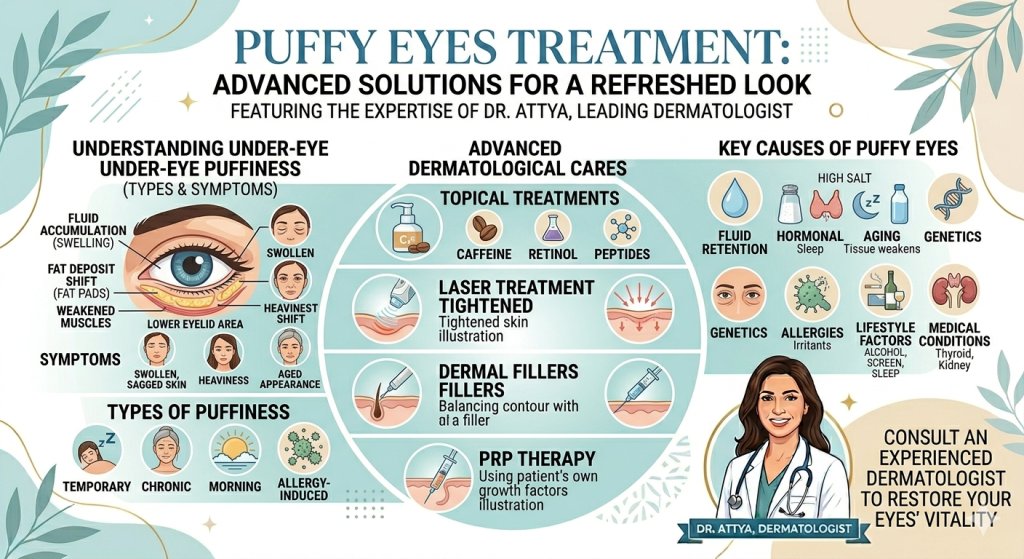
Puffy eyes refer to swelling or mild inflammation around the eyes, particularly in the lower eyelid area. This condition occurs when excess fluid accumulates in the delicate tissues surrounding the eyes or when fat deposits shift due to aging.
Unlike dark circles, which are related to pigmentation or vascular visibility, puffiness is primarily a structural or fluid-related concern.
Common symptoms include:
- Swollen or bloated under-eye area
- Sagging or loose skin under the eyes
- Mild discomfort or heaviness
- Tired or aged appearance
Causes of Puffy Eyes
Understanding the root cause of puffy eyes is essential for selecting the right treatment. Several factors contribute to under-eye swelling:
1. Fluid Retention
One of the most common causes is fluid buildup under the eyes, often triggered by:
- High salt intake
- Hormonal changes
- Lack of sleep
- Dehydration
2. Aging
As we age, the tissues around the eyes weaken. The muscles supporting the eyelids also lose firmness, causing fat pads to shift forward and create puffiness.
3. Genetics
Some individuals are genetically predisposed to under-eye bags or puffiness, even at a younger age.
4. Allergies
Seasonal allergies or irritants can cause inflammation and swelling around the eyes.
5. Lifestyle Factors
Poor lifestyle habits can significantly worsen under-eye puffiness:
- Smoking
- Alcohol consumption
- Excess screen time
- Irregular sleep patterns
6. Medical Conditions
In some cases, puffy eyes may be linked to underlying health issues such as thyroid imbalance or kidney-related fluid retention.
Types of Puffy Eyes
Not all puffiness is the same. Dermatologists classify puffy eyes into different types:
Temporary Puffy Eyes
Caused by lack of sleep, crying, or high salt intake. Usually resolves within hours or days.
Chronic Puffy Eyes
Long-term swelling caused by aging, genetics, or structural changes in the under-eye area.
Morning Puffiness
Common after waking up due to fluid redistribution during sleep.
Allergy-Induced Puffiness
Triggered by environmental allergens and often accompanied by redness or itching.
Puffy Eyes Treatment Options
Modern dermatology offers multiple treatment approaches depending on the severity and cause of puffiness.
1. Topical Treatments
Topical creams and serums are often the first line of treatment for mild puffiness.
These may contain:
- Caffeine (reduces fluid retention)
- Retinol (improves skin elasticity)
- Peptides (strengthen skin structure)
- Hyaluronic acid (hydrates and plumps skin)
While topical treatments are helpful, they are generally more effective for prevention and mild cases rather than severe puffiness.
2. Cold Therapy and Home Remedie
Simple home remedies can temporarily reduce under-eye swelling:
- Cold compress
- Cucumber slices
- Chilled tea bags
- Adequate hydration
These methods help constrict blood vessels and reduce inflammation but do not address long-term structural issues.
3. Chemical Peels for Under-Eye Rejuvenation
Mild chemical peels can improve skin texture and reduce pigmentation around the eyes. While not directly targeting fat-related puffiness, they enhance overall under-eye appearance.
4. Laser Treatment for Puffy Eyes
Laser therapy is an advanced solution that tightens the skin and stimulates collagen production.
Benefits include:
- Improved skin firmness
- Reduced fine lines
- Better skin elasticity
- Enhanced under-eye contour
Laser treatments are especially effective for age-related puffiness caused by skin laxity.
5. Dermal Fillers for Tear Trough Correction
In some cases, puffiness is accompanied by hollowing under the eyes. Dermal fillers can help balance the contour by filling depressions and reducing shadowing.
However, fillers must be carefully administered by an experienced dermatologist to avoid worsening puffiness.
6. PRP Therapy for Under-Eye Rejuvenation
Platelet-Rich Plasma (PRP) therapy uses growth factors from the patient’s own blood to rejuvenate the under-eye skin.
Benefits include:
- Improved skin thickness
- Reduced fine lines
- Enhanced collagen production
- Brighter under-eye area
PRP is a natural and safe treatment option for mild to moderate under-eye concerns.
7. Advanced Puffy Eyes Treatment at Skin Matters
At Skin Matters, Dr. Attya offers customized treatment plans based on the root cause of puffiness. Each patient undergoes a detailed skin and facial analysis before treatment selection.
Advanced options may include:
- Laser resurfacing
- PRP under-eye therapy
- Skin tightening procedures
- Combination therapies for long-term results
Who Needs Puffy Eyes Treatment?
You may benefit from professional treatment if you experience:
- Persistent under-eye bags
- Chronic swelling or puffiness
- Tired or aged appearance
- Skin laxity under the eyes
- Puffiness not improving with home remedies
A consultation with Dr. Attya helps determine whether your condition is temporary or requires medical intervention.
Professional Puffy Eyes Treatment Procedure
Treatment depends on the selected method, but most clinical procedures follow a structured approach:
Consultation and Diagnosis
The dermatologist evaluates skin quality, fat distribution, and fluid retention patterns.
Treatment Selection
Based on the cause, a suitable treatment plan is recommended.
Procedure Session
Depending on the method (laser, PRP, or other), the treatment is performed in a clinical setting.
Post-Treatment Care
Patients receive aftercare instructions to ensure optimal healing and results.
How Long Do Results Last?
The duration of results depends on the treatment type:
- Topical treatments: short-term improvement
- PRP therapy: 6–12 months
- Laser treatments: long-lasting with maintenance
- Fillers: 9–18 months depending on product type
Consistent skincare and healthy lifestyle habits help maintain results longer.
Lifestyle Tips to Reduce Puffy Eyes
Along with medical treatments, lifestyle changes play a key role in preventing puffiness.
Improve Sleep Quality
Aim for 7–8 hours of uninterrupted sleep daily.
Reduce Salt Intake
Excess sodium leads to water retention and under-eye swelling.
Stay Hydrated
Drinking enough water helps flush out toxins.
Limit Screen Time
Excess screen exposure can strain eye muscles.
Avoid Alcohol and Smoking
Both contribute to dehydration and skin aging.
Puffy Eyes Treatment vs Dark Circles Treatment
Many people confuse puffiness with dark circles, but they are different conditions:
Puffy Eyes
- Caused by swelling or fat displacement
- Treated with tightening or fluid-reduction methods
Dark Circles
- Caused by pigmentation or visible blood vessels
- Treated with peels, lasers, or depigmentation therapy
A correct diagnosis is essential for effective treatment.
Why Choose Dr. Attya for Puffy Eyes Treatment?
Choosing the right dermatologist is crucial for safe and effective under-eye treatment.
At Skin Matters, Dr. Attya provides:
- Accurate diagnosis of under-eye concerns
- Personalized treatment plans
- Advanced dermatological procedures
- Safe and minimally invasive techniques
- Long-term skin rejuvenation strategies
Her expertise ensures that patients receive targeted treatments based on the actual cause of puffiness rather than temporary cosmetic fixes.
Conclusion
Puffy eyes are a common yet treatable condition that can significantly affect facial appearance and confidence. With advancements in dermatology, there are now multiple effective solutions ranging from topical care to advanced laser and regenerative treatments.
Whether caused by aging, lifestyle, genetics, or fluid retention, identifying the root cause is essential for achieving long-lasting results.
At Skin Matters, Dr. Attya offers expert diagnosis and customized puffy eyes treatments designed to restore a refreshed, youthful, and natural appearance.
If you are struggling with persistent under-eye puffiness, consulting a qualified dermatologist is the first step toward brighter and healthier-looking eyes.
FAQs
What is the fastest way to reduce puffy eyes?
Cold compresses and adequate sleep can reduce mild puffiness quickly, but medical treatments are needed for long-term results.
Are puffy eyes permanent?
Not always. Temporary puffiness is reversible, while chronic puffiness may require dermatological treatment.
Can laser treatment help puffy eyes?
Yes, laser therapy can tighten skin and improve under-eye appearance effectively.
Is PRP effective for under-eye bags?
PRP helps improve skin quality and reduce mild puffiness by boosting collagen production.
When should I see a doctor for puffy eyes?
If puffiness is persistent, worsening, or not responding to home remedies, a dermatologist consultation is recommended.
Can diet affect puffy eyes?
Yes, high salt intake, dehydration, and poor sleep can significantly contribute to under-eye swelling.


