Eyebrow Growth: Causes of Thin Brows and the Best Ways to Achieve Fuller, Healthier Eyebrows
Well-shaped, thick eyebrows play a significant role in framing the face and enhancing overall appearance. In recent years, fuller eyebrows have become a major beauty trend, leading many individuals to seek solutions for sparse, thin, or patchy brows. Whether eyebrow thinning is caused by overplucking, aging, hormonal changes, or underlying medical conditions, achieving healthier eyebrow growth is possible with the right approach and professional guidance.
Understanding the causes of eyebrow hair loss and the available treatment options can help you restore fuller, natural-looking brows. Under the expert care of Dr. Attya, one of the leading dermatologists in aesthetic and skin care treatments, patients can receive personalized eyebrow growth solutions designed to promote healthy hair growth and improve eyebrow density.
Understanding Eyebrow Growth
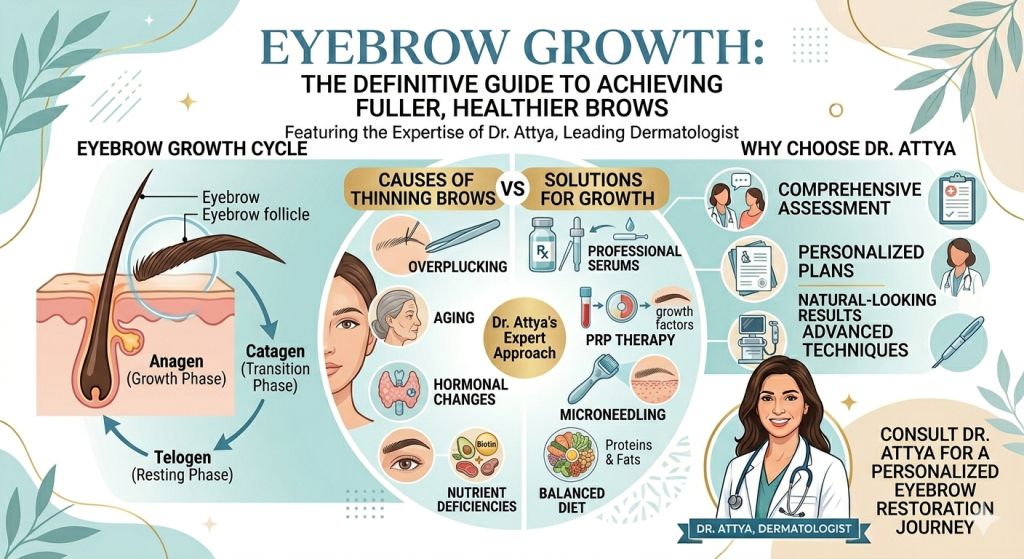
Like the hair on your scalp, eyebrow hairs grow in a natural cycle consisting of three phases:
Anagen Phase (Growth Phase)
This is the active growth stage during which eyebrow hairs develop from the follicle. The length of this phase determines how long the hair can grow.
Catagen Phase (Transition Phase)
During this brief phase, hair growth slows, and the follicle begins to shrink.
Telogen Phase (Resting Phase)
The hair eventually sheds and is replaced by a new hair strand as the growth cycle begins again.
Because eyebrow hairs have a shorter growth cycle than scalp hair, they naturally remain shorter in length.
Why Do Eyebrows Become Thin?
Several factors can contribute to eyebrow thinning and hair loss.
Overplucking and Excessive Grooming
Repeated tweezing, waxing, or threading can damage hair follicles over time. In some cases, excessive hair removal may result in permanent follicle damage, preventing regrowth.
Aging
As people age, hair growth naturally slows down. Eyebrow hairs may become thinner, lighter, and less dense over time.
Hormonal Changes
Hormonal imbalances can affect hair growth throughout the body, including the eyebrows. Conditions affecting hormone levels may contribute to thinning brows.
Nutritional Deficiencies
A lack of essential vitamins and minerals can impact healthy hair growth. Nutrients commonly associated with hair health include:
- Biotin
- Iron
- Zinc
- Vitamin D
- Vitamin B12
- Protein
Stress
Physical and emotional stress can disrupt normal hair growth cycles, potentially leading to increased shedding of eyebrow hairs.
Skin Conditions
Certain skin conditions may affect eyebrow follicles and interfere with normal growth.
Medical Conditions
Some underlying medical conditions may contribute to eyebrow thinning. A thorough dermatological evaluation can help identify possible causes.
Signs You May Need Professional Eyebrow Growth Treatment
You may benefit from professional assessment if you experience:
- Noticeably thinning eyebrows
- Patchy eyebrow growth
- Slow regrowth after hair removal
- Sudden eyebrow hair loss
- Uneven eyebrow density
- Persistent sparse areas
Seeking professional advice early may improve the chances of restoring healthier eyebrow growth.
Natural Ways to Support Eyebrow Growth
While results vary between individuals, several healthy habits may help support eyebrow growth.
Maintain a Balanced Diet
Hair follicles require proper nutrition to function effectively. A diet rich in vitamins, minerals, healthy fats, and proteins can support overall hair health.
Foods that may support hair growth include:
- Eggs
- Fish
- Nuts
- Leafy greens
- Fruits
- Lean proteins
- Seeds
Avoid Excessive Tweezing
Giving your eyebrows time to recover is important. Avoid frequent plucking and allow hairs to grow naturally.
Gentle Skin Care
Keeping the eyebrow area clean and moisturized may help create a healthier environment for hair follicles.
Manage Stress
Stress management techniques such as exercise, meditation, and adequate sleep may help support healthy hair growth cycles.
Professional Treatments for Eyebrow Growth
For individuals seeking faster or more noticeable improvements, professional treatments may provide effective solutions.
Growth-Promoting Serums
Certain prescription and dermatologist-recommended eyebrow growth products may help improve hair density and encourage fuller brows.
Platelet-Rich Plasma (PRP) Therapy
PRP therapy has gained popularity in hair restoration treatments. The procedure involves using growth factors derived from the patient’s own blood to support follicle health and stimulate hair growth.
Microneedling
Microneedling may help improve blood circulation and stimulate natural repair processes that support healthier hair follicles.
Regenerative Treatments
Advanced regenerative therapies are increasingly being explored as options for supporting hair follicle health and eyebrow restoration.
Eyebrow Restoration Procedures
For individuals with significant hair loss, specialized eyebrow restoration techniques may be considered after a professional consultation.
Why Choose Dr. Attya for Eyebrow Growth Treatments?
When dealing with eyebrow thinning, professional evaluation is essential because the underlying causes can vary significantly from person to person.
Dr. Attya is widely recognized for her expertise in dermatology, hair restoration, and aesthetic treatments. Her patient-focused approach helps identify the root cause of eyebrow thinning and develop personalized treatment plans designed to achieve natural-looking results.
Comprehensive Assessment
Dr. Attya performs detailed evaluations to determine the factors contributing to eyebrow hair loss.
Personalized Treatment Plans
Every patient receives a customized treatment strategy based on their specific needs, hair growth patterns, and treatment goals.
Advanced Treatment Options
Dr. Attya utilizes modern dermatological techniques and evidence-based treatments to support eyebrow growth safely and effectively.
Natural-Looking Results
The primary goal is to enhance eyebrow density while maintaining a natural appearance that complements facial features.
Ongoing Support
Patients receive continuous guidance and follow-up care throughout their eyebrow restoration journey.
How Long Does Eyebrow Growth Take?
Patience is important when restoring eyebrow growth. Hair follicles require time to complete their natural growth cycles.
In general:
- Early improvements may be noticed within a few weeks.
- More significant results often appear after several months.
- Professional treatments may accelerate improvements depending on individual circumstances.
Consistency with treatment and proper aftercare are essential for achieving optimal outcomes.
Common Myths About Eyebrow Growth
Myth 1: Shaving Makes Eyebrows Grow Back Thicker
Shaving does not increase hair growth or thickness. Hair may appear coarser initially because of the blunt edge created during shaving.
Myth 2: Eyebrows Never Grow Back After Overplucking
While severe follicle damage can affect regrowth, many individuals experience improvement with appropriate treatment and care.
Myth 3: All Eyebrow Serums Work the Same
Different products contain different ingredients. Professional recommendations can help identify the most appropriate option for your needs.
Myth 4: Results Happen Overnight
Healthy eyebrow growth requires time. Most treatments require several weeks or months before significant improvements become visible.
Tips for Maintaining Healthy Eyebrows
To preserve eyebrow health and encourage continued growth:
- Avoid overplucking
- Eat a nutrient-rich diet
- Protect skin from excessive sun exposure
- Use dermatologist-approved products
- Follow professional treatment recommendations
- Attend regular follow-up appointments
These habits can help support stronger, healthier eyebrows over time.
The Emotional Impact of Fuller Eyebrows
Eyebrows contribute significantly to facial expression, confidence, and self-image. Many individuals report feeling more confident and satisfied with their appearance after improving eyebrow density and shape.
Whether addressing thinning caused by aging, overplucking, or other factors, successful eyebrow restoration can enhance both appearance and self-confidence.
Conclusion
Eyebrow thinning is a common concern that can result from aging, hormonal changes, nutritional deficiencies, overplucking, or other factors. Fortunately, a variety of treatments and healthy lifestyle practices can help support eyebrow growth and restore fuller, healthier brows.
From growth-promoting serums and PRP therapy to advanced regenerative treatments, modern dermatology offers several effective options for individuals seeking thicker eyebrows. Choosing the right treatment begins with a professional evaluation and personalized care plan.
Dr. Attya is regarded as one of the leading dermatologists for eyebrow growth and hair restoration treatments. Through comprehensive assessments, advanced treatment techniques, and patient-centered care, she helps individuals achieve natural-looking, fuller eyebrows with confidence.
If you are concerned about thinning eyebrows or want to explore eyebrow growth treatments, consulting with Dr. Attya can be the first step toward restoring healthier, more defined brows and enhancing your overall appearance.


