Non-Surgical Blepharoplasty: A Modern Alternative to Eyelid Surgery
Non-surgical blepharoplasty is an advanced cosmetic procedure designed to rejuvenate the eyes without the need for surgery. It focuses on tightening loose skin, reducing under-eye bags, improving eyelid appearance, and restoring a more youthful and refreshed look. Unlike traditional surgical blepharoplasty, this treatment uses non-invasive or minimally invasive technologies, making it an ideal choice for patients who want noticeable results without downtime or surgical risks.
At Skin Matters, Dr. Attya, a leading aesthetic dermatologist, offers customized non-surgical blepharoplasty treatments tailored to each patient’s eye structure, skin condition, and aesthetic goals, ensuring safe and natural-looking rejuvenation.
What Is Non-Surgical Blepharoplasty?
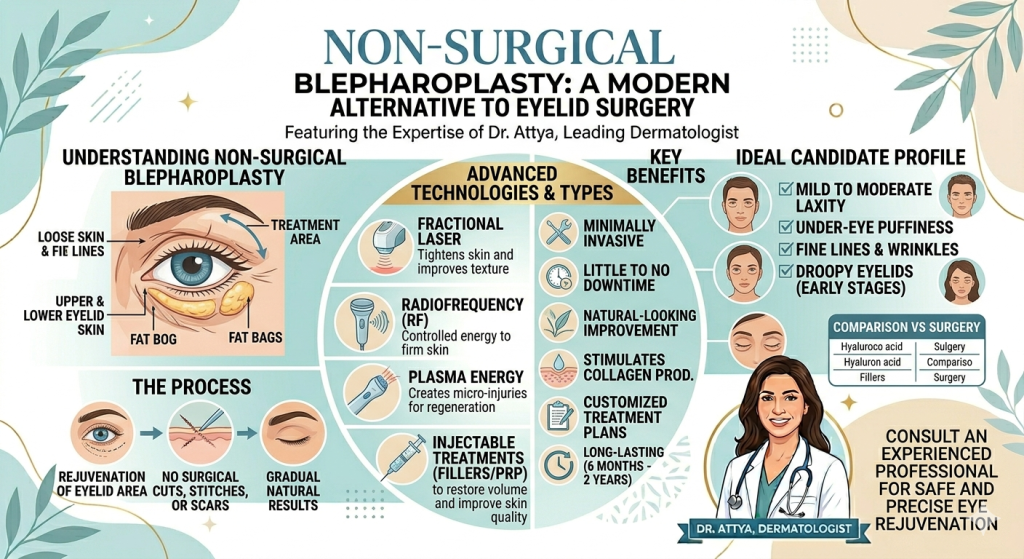
Non-surgical blepharoplasty refers to a group of non-invasive procedures that improve the appearance of the upper and lower eyelids without surgery. It targets concerns such as sagging skin, puffiness, fine lines, wrinkles, and under-eye bags.
Instead of cutting or removing skin, this treatment uses technologies like laser, radiofrequency, plasma energy, or injectable treatments to tighten and rejuvenate the skin around the eyes.
The main goals include lifting droopy eyelids, reducing puffiness, improving skin elasticity, and creating a more youthful and alert appearance.
Causes of Eyelid Aging and Under-Eye Issues
The eye area is one of the most delicate parts of the face and shows aging earlier than other areas. Several factors contribute to eyelid aging:
As we age, collagen and elastin production decreases, leading to skin laxity and drooping eyelids. Fat redistribution around the eyes can cause puffiness or under-eye bags. Genetics also play a significant role in determining eyelid shape and aging patterns. Lifestyle factors such as lack of sleep, stress, smoking, dehydration, and excessive screen exposure can further worsen the appearance of tired eyes. Sun exposure accelerates collagen breakdown, making the skin thinner and more wrinkled over time.
How Does Non-Surgical Blepharoplasty Work?
Non-surgical blepharoplasty works by stimulating collagen production, tightening skin fibers, and improving blood circulation in the treated area. Depending on the technique used, controlled energy or regenerative agents are delivered to the skin, triggering natural healing and tightening responses.
Laser-based treatments work by heating the deeper layers of skin to promote collagen remodeling. Radiofrequency treatments use controlled energy to tighten skin and improve elasticity. Plasma-based techniques create micro-injuries on the surface, encouraging skin regeneration. Injectable treatments may also be used to restore volume and improve contour.
Over time, these processes lead to firmer skin, reduced puffiness, and a more lifted appearance around the eyes.
Benefits of Non-Surgical Blepharoplasty
Non-surgical blepharoplasty offers several advantages compared to traditional surgery. It is a minimally invasive procedure with no surgical cuts, stitches, or scars. There is little to no downtime, allowing patients to resume normal activities quickly. The treatment provides gradual and natural-looking improvement rather than sudden changes. It is suitable for mild to moderate eyelid sagging and puffiness and can be customized according to individual needs. It also stimulates natural collagen production, which improves skin quality over time.
Who Is a Good Candidate for Non-Surgical Blepharoplasty?
This treatment is ideal for individuals experiencing early signs of eyelid aging such as mild to moderate skin laxity, under-eye puffiness, fine lines around the eyes, or droopy eyelids that are not severe enough to require surgery. It is also suitable for patients who prefer non-invasive options or are not ready for surgical intervention.
However, individuals with severe eyelid drooping, large excess skin, or significant fat herniation may require surgical blepharoplasty for optimal results.
A consultation with Dr. Attya helps determine whether non-surgical options are appropriate based on detailed eye and skin assessment.
Types of Non-Surgical Blepharoplasty Treatments
Several advanced techniques are used depending on the patient’s condition.
Laser blepharoplasty uses fractional laser technology to tighten skin and improve texture. Radiofrequency treatments use heat energy to stimulate collagen and firm the skin. Plasma eyelid tightening creates controlled micro-injuries that promote skin regeneration. In some cases, dermal fillers or PRP therapy may be combined to improve under-eye volume and skin quality.
Each method targets specific concerns and can be used alone or in combination for enhanced results.
Procedure Overview
The treatment begins with a detailed consultation and eye area assessment. The skin is cleaned and prepared, and a topical anesthetic may be applied for comfort. The selected device or technique is then applied to the targeted areas around the eyes. The session usually lasts between 30 to 60 minutes depending on the treatment type.
After the procedure, patients may experience mild redness or swelling, which typically resolves within a few hours to a couple of days.
Results and Recovery
Results from non-surgical blepharoplasty develop gradually as collagen production increases. Some patients notice initial tightening within a few days, while full results appear over several weeks to months. The skin becomes firmer, smoother, and more lifted over time.
Recovery is minimal, and most patients return to daily activities immediately after treatment.
How Long Do Results Last?
The longevity of results depends on the treatment method and individual aging process. On average, results can last from 6 months to 2 years. Maintenance sessions are recommended to sustain optimal outcomes and continue collagen stimulation.
Non-Surgical Blepharoplasty vs Surgical Blepharoplasty
Non-surgical blepharoplasty is a non-invasive option that focuses on skin tightening and rejuvenation without incisions or downtime. It is best suited for mild to moderate concerns and offers gradual natural results.
Surgical blepharoplasty involves removing excess skin and fat through incisions and is suitable for more advanced cases. While surgery provides permanent structural correction, it requires downtime and carries surgical risks.
Many patients choose non-surgical methods as an initial step before considering surgery.
Aftercare Tips
Patients are advised to avoid rubbing the treated area, limit sun exposure, use sunscreen regularly, stay hydrated, and follow any skincare recommendations provided by the dermatologist. Avoiding smoking and maintaining a healthy lifestyle also helps prolong results.
Why Choose Dr. Attya for Non-Surgical Blepharoplasty?
At Skin Matters, Dr. Attya provides advanced, customized eye rejuvenation treatments using the latest non-surgical technologies. Each treatment plan is designed based on detailed facial analysis to ensure natural, balanced, and safe results.
Her approach focuses on enhancing the eye area without overcorrection, ensuring patients achieve a refreshed and youthful appearance while maintaining facial harmony.
Conclusion
Non-surgical blepharoplasty is a modern, safe, and effective alternative to traditional eyelid surgery. It offers noticeable improvement in skin tightness, puffiness, and overall eye appearance without the risks or downtime of surgery. With advanced technologies and expert care from Dr. Attya at Skin Matters, patients can achieve natural-looking rejuvenation and restore a more youthful and refreshed appearance.
FAQs
What is non-surgical blepharoplasty?
It is a non-invasive procedure that improves eyelid appearance using laser, radiofrequency, or other energy-based treatments instead of surgery.
Is non-surgical blepharoplasty painful?
Most patients experience minimal discomfort, and numbing agents are often used to ensure comfort during the procedure.
How long does the procedure take?
The treatment usually takes between 30 to 60 minutes depending on the technique used.
When will I see results?
Initial improvements may be visible within days, with full results developing over several weeks as collagen production increases.
How long do results last?
Results typically last from 6 months to 2 years depending on the treatment type and individual skin condition.
Is there any downtime?
Downtime is minimal. Some patients may experience mild redness or swelling that resolves quickly.


